



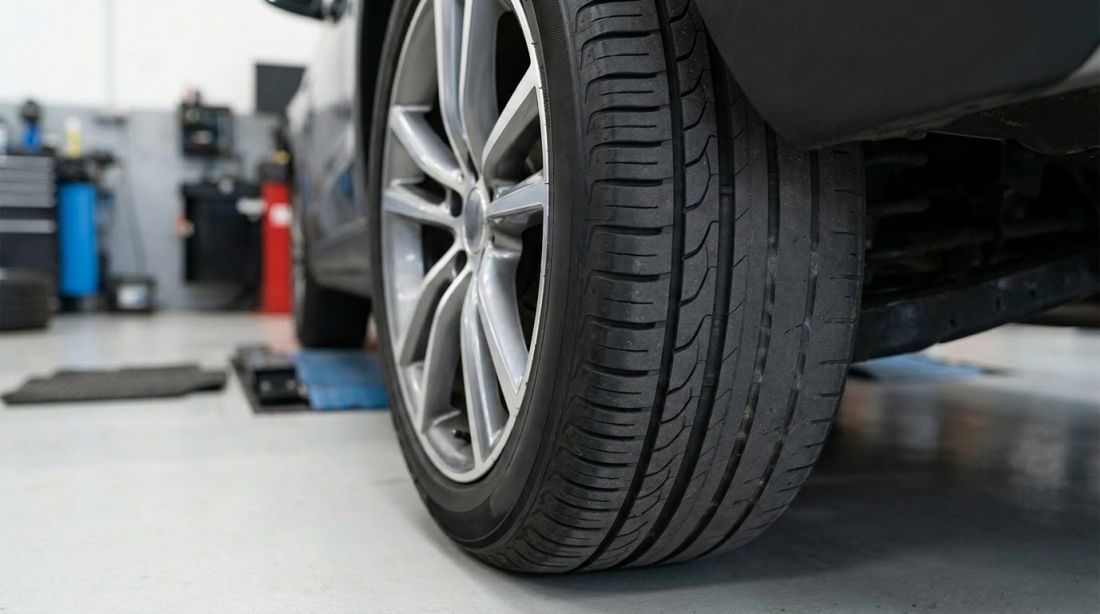
Tyre Tread and Wear: When to Replace Your Tyres
Your tyres are the only part of your car that actually touches the road — so tread depth and tyre condition matter far more than most people realise. At Blackhurst, we fit tyres in Whitchurch and we’re always happy to take a quick look if you’re unsure whether yours are safe or close to needing replacement.
Below is a simple guide to when to replace your tyres, what different wear patterns mean, and a few easy checks you can do at home.
1) The legal tread depth (and what we recommend)
For cars and light vans, the legal minimum tread depth in the UK is 1.6mm across the central three-quarters of the tread, and around the entire circumference.
In the real world, we often recommend replacing tyres before you hit the legal limit — because grip (especially in wet conditions) reduces as tread gets lower.
2) How to check your tread quickly
If you don’t have a tread gauge, the simplest quick check is the 20p test:
Put a 20p coin into the main grooves.
If you cannot see the raised outer rim of the coin (with the words “TWENTY PENCE” engraved), then the tyre has sufficient tread depth.
Make sure that you check in at least three different places on each tyre, as one part may be more worn than another.
Many tyres also have tread wear indicators (small bars in the grooves). When the tread is level with those bars, the tyre is at/near its limit.
3) Tyre wear patterns and what they usually mean
Tread depth is only part of it — a tyre can have “enough tread” but still be unsafe if it’s worn unevenly or damaged.
Wear on the inner or outer edge
This can point to wheel alignment/tracking issues, worn suspension parts, or regular kerb impacts.
More wear in the centre of the tyre
Often caused by over-inflation (too much pressure).
More wear on both edges
Often caused by under-inflation (too little pressure).
If you’re seeing any uneven wear, it’s worth getting it checked sooner rather than later — it can save you money by stopping new tyres from wearing out early.
4) Damage signs that mean “replace it”
We’d always rather you bring the car in and let us check, but in general, replace (or get checked immediately) if you spot:
Cuts, bulges, or lumps in the sidewall
Cracks in the rubber
Nails/screws in the tyre (don’t just pull them out)
Repeated pressure loss (slow puncture)
Even if tread looks fine, sidewall damage can make a tyre unsafe.
5) When tyres should be replaced (a simple rule of thumb)
You should consider replacing your tyres if:
tread depth is close to the legal limit (or below)
wear is uneven
there’s visible damage (cuts, bulges, cracking)
the tyre keeps losing pressure
the car doesn’t feel right (vibration, pulling, reduced grip)
If you do lots of motorway miles, carry heavy loads, or drive mainly in stop-start conditions, tyres can wear faster than you expect — so regular checks really help.
6) Quick checks we recommend doing monthly
A quick once-a-month routine makes a big difference:
Check pressures (including the spare if you have one)
Check tread depth
Look for damage and uneven wear
The Highway Code also makes clear tyres must be correctly inflated and free from certain defects.
Book tyres or ask us to check them
If you already know what you need, you can book tyres online here: Tyres – Whitchurch Tyres Centre.
If you’re not sure (or you’ve noticed uneven wear), drop us a message and we’ll point you in the right direction: Contact Blackhurst Garages.
Frequently Asked Questions
What is the legal tyre tread depth in the UK?
For cars and light vans it’s 1.6mm across the central three-quarters of the tread, and around the whole tyre.
Is the 20p test reliable?
It’s a useful quick check, but it’s not as accurate as a proper tread gauge—if you’re unsure, we’re happy to measure it.
Can I replace just one tyre?
Sometimes, but it’s often best to replace tyres in pairs on the same axle so the car handles predictably (especially in the wet).
Why are my tyres wearing more on one edge?
That often points to alignment/tracking or suspension wear — getting it checked early can prevent new tyres wearing out too quickly.
How often should I check tyre pressures and tread?
Monthly is a good habit, and always before long journeys.